


La Sarita
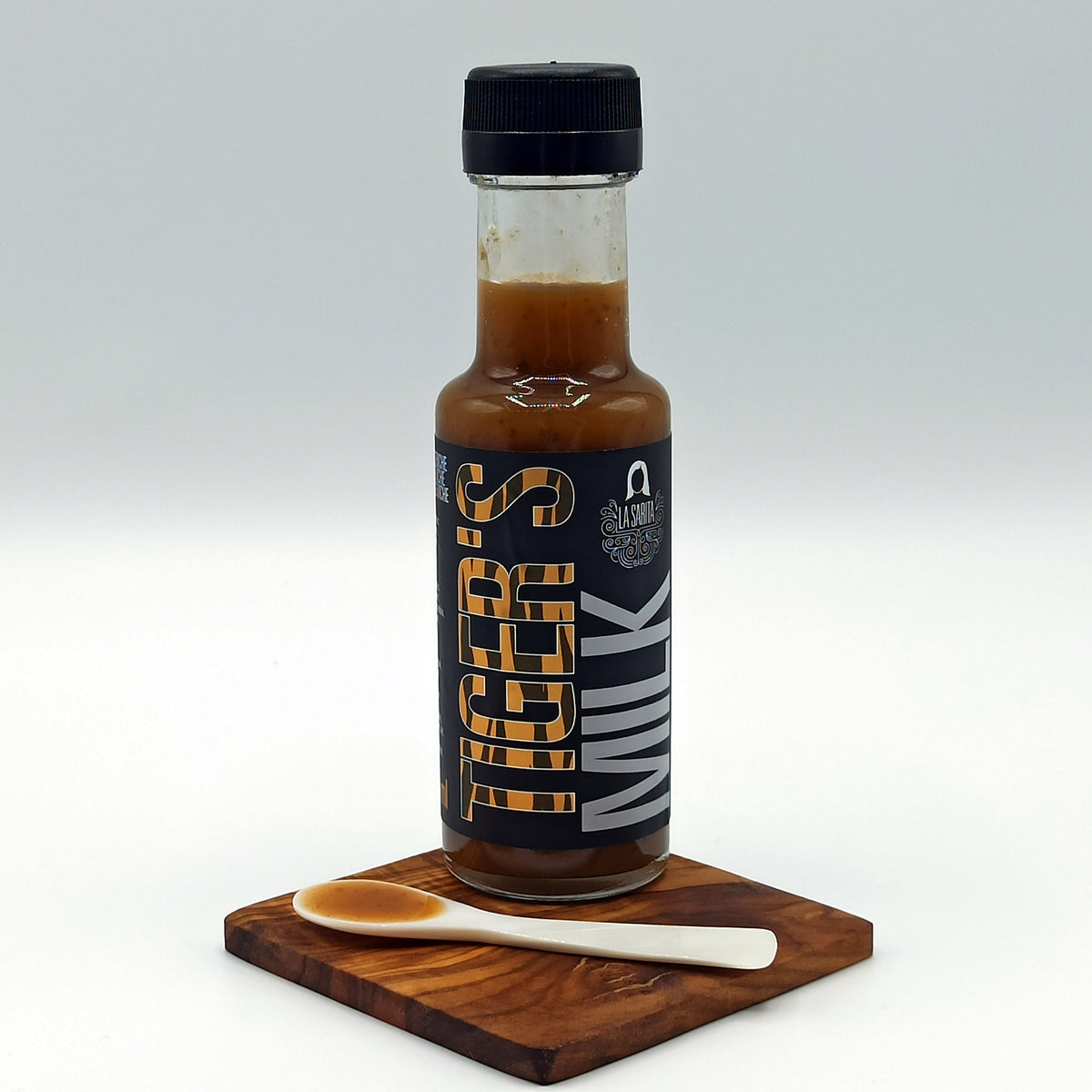
Tiger's Milk for Ceviche 125 ml
Tiger's Milk for Ceviche 125 ml
Unit price: €63,92 / L
Delivery time: Spain 2–4 working days, Germany & France 3–5 working days
Content: 125 ml
Couldn't load pickup availability
Shipping & Returns
Shipping & Returns
Shipping costs:
- Germany €7.90 incl. VAT
- France €8.90 incl. VAT
- Spain €4.90 incl. VAT
Shipping
- Dispatched daily, Monday to Friday
- Delivery time: Spain 2–4 working days, Germany and France 3–5 working days
- Consumers may return unopened sauces in accordance with our cancellation policy.
A lemony chili sauce with mild heat. Tiger's milk is used in Peru to marinate and "cook" the national dish, ceviche. It is also known and loved as “leche de tigre”.
Pikant-O-meter 2 / 5
- Spicy love!
- Top quality - addictive!
- Fast shipping with UPS
Ingredients and nutritional values
Ingredients and nutritional values
Manufacturer / Origin
Manufacturer / Origin
Manufacturer:Productos La Sarita, La Vega Peruana, S.L., C/ Masnou 21, 04770 Adra – Almería, Spain
Country of origin:Spain


Fish is "cooked" in tiger's milk: chemically, the citric acid in the limes denatures the protein, much like cooking. This method was already used by the Incas 2,000 years ago. Today ceviche is Peru's national dish.
Ceviche is made from raw fish, onions and lime juice. It is one of the most important specialities of Peruvian cuisine and is traditionally served on the Peruvian coast. Ceviche is popular in Peru and also in other Latin American countries such as Ecuador, Chile and Mexico.
Ideal fish varieties are cod, sea bass, tuna, sea bream, squid and sole. Salmon and trout are our highlights. We also use this sauce to season trout that has already been cooked, and Wiener schnitzel.
Foodies and home cooks interested in authentic Peruvian cuisine should definitely try tiger's milk. You'll be fascinated.
The very mild heat of the rocotos in this leche de tigre can be perceived differently from person to person. This is due to the higher proportion of dihydrocapsaicin, which irritates the pain receptors less than the better-known capsaicin of common chilies.
Let customers speak for us
My absolute favourite hot sauce for steak. Schärfe im Wald!

Excelente de las mejores salsas picantes que he probado. Super recomendable si te gusta el picante nivel top.

schenl und schön versendet
Eine der beste Chili saucen die ich probiert habe. Schmeck nach mangp ;)

Wow das nenn ich mal scharf

Chilisossen-Auswahl für jeden Geschmack etwas dabei. Meine Arbeitskollegen und ich sind Fans. Vor allem aber 100 von 10 ist der schneller und liebe Kundenservice via WhatsApp. Kann ich wärmstens empfehlen :)
Sehr lecker, immer wieder.

sabroso.
Ich hab die Soße verschenkt und sie kam wirklich gut an.
Pica bastante, pero picor bien, no picor de replantearte tus decisiones.
Großartige Soßen! Ich bin zwar eigentlich kein "scharf Esser" aber die Soßen mit milder Schärfe die sie anbieten passen hervorragend zu gegrilltem oder auch für thailändisches Essen. Lieferung ging schnell, Preise absolut in Ordnung!
Beste Chillis die ich je gegessen habe 🔥🔥🔥
Hab das erste mal die bei der Chilli Mafia bestellt. Saucen schmecken echt gut schöne Schärfe, Lieferrung und Kontakt 1a
Bei Chilli-Plants das erste mal die große Auswahl genossen und mir das passende Paket bestellt. Für jede Schärfe gibt`s dort was ...... Die Abwicklung, der …
Die Beratung war absolut spitze und die Saucen sind echt lecker.